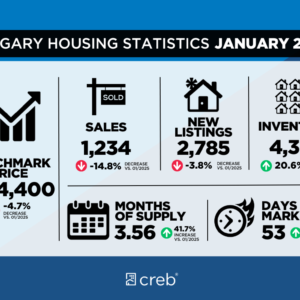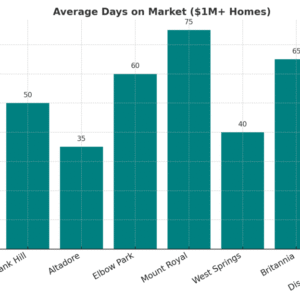
In 2025, the Calgary real estate market is expected to remain robust, with a mix of economic factors shaping decisions for both buyers and sellers. This article explores the key drivers impacting the housing market, offering insights to help you make informed choices. Infographics and images are included to provide visual clarity.
The Calgary real estate market operates within the larger framework of Alberta‘s and Canada’s economies. Alberta’s energy sector continues to thrive, bolstered by higher energy prices, favourable exchange rates, and increased production following the opening of the Trans Mountain Expansion (TMX) pipeline. Investments in alternative energy, carbon capture, food manufacturing, and artificial intelligence are driving economic activity. Meanwhile, easing lending rates are supporting household spending and housing activity.
However, potential U.S. tariffs remain a significant risk. The Monetary Policy Report (MPR) highlights that while no tariffs have been incorporated into current forecasts, their threat has already caused uncertainty in financial markets and business decisions. If broad 25% tariffs on all exports materialize, Alberta’s economy could enter a recession, negatively affecting investment, employment, and consumer confidence [MPR]. Conversely, if the energy sector is exempt or tariffs prove short-lived, stronger economic growth could boost housing demand and price appreciation.
Figure 1: Alberta GDP Growth Forecast vs Potential Tariff Scenarios
Interest rates play a pivotal role in determining affordability and buyer confidence. In 2024, the Bank of Canada cut its policy rate significantly, contributing to an increase in household spending and housing activity. The Overnight Target Rate forecast projects further reductions, settling at 2.00% by Q4-2025. Lower interest rates reduce monthly mortgage payments, making homeownership more accessible for first-time buyers and those looking to upgrade.
A weaker Canadian dollar, driven by growing policy divergence between the Bank of Canada and the U.S. Federal Reserve, could raise costs for imported goods like machinery and building materials. However, it might also enhance export competitiveness, offsetting some adverse effects.
Quarter | Bank of Canada Rate | U.S Fed Rate (%) | Rate Differential |
Q1-2025 | 2.75 | 4.25–4.50 | 1.50–1.75 |
Q4-2025 | 2.00 | 4.25–4.50 | 2.25–2.50 |
Table 1: Interest Rate Differentials Between Canada and the U.S.
Population dynamics directly influence housing demand and inventory levels. While migration into Alberta remains robust, it is projected to slow slightly in 2025, aligning with federal immigration policy changes aimed at reducing non-permanent resident inflows. Despite this moderation, Calgary’s population growth is still anticipated to outpace provincial averages, driven by international migration and continued interprovincial movement.
Slower migration could temper demand in higher-price ranges, where newcomers often focus their searches. Meanwhile, steady growth in lower-priced segments ensures ongoing interest among first-time buyers and families seeking affordable living options. For instance, according to the lates CREB Report, areas like North East Calgary continue to see strong demand due to their relative affordability compared to central districts.
Source: Conference Board of Canada, ATB Economics
Note: Forecasted values are denoted by "(F)" and are based on available data as of December 31, 2024.
Employment trends shape purchasing power and housing preferences. In 2024, Calgary experienced notable job growth in manufacturing, accommodation, food services, transportation, warehousing, and information, culture, and recreation sectors. Looking ahead, employment levels are expected to grow by two percent in 2025, led by gains in construction, retail trade, healthcare, and education.
While employment growth supports housing demand, easing migration will likely slow labor force expansion, preventing further increases in unemployment rates. This stabilization benefits existing homeowners who rely on stable income streams but may limit opportunities for new entrants into the workforce seeking starter homes.
Key Employment Sectors:
Source: Conference Board of Canada (F)
Note: Forecasted values are denoted by "(F)" and are based on available data as of December 31, 2024.
Currency movements add another layer of complexity to the housing market. Over 2024, the Canadian dollar depreciated nearly 8% against the U.S. dollar, reaching a two-decade low of C$1.44. Analysts predict further weakening in 2025, with projections ranging from C$1.45 to C$1.50. This depreciation stems from multiple factors, including rising uncertainty around trade policies, growing policy divergence between the Bank of Canada and the U.S. Federal Reserve, and concerns about potential tariffs under the Trump administration.
A weaker loonie has mixed implications for the housing market. On one hand, it boosts returns for Canadian investors holding USD-denominated assets, enhancing wealth effects. On the other hand, higher import costs for goods like machinery and equipment could inflate construction expenses, potentially slowing new developments.
Projected Exchange Rates:
Source: Financials Document, Macquarie Group, BMO Economics
Note: Projections range from C$1.45 to C$1.50 by Q3-2025 due to potential tariffs and monetary policy divergence.
Limited supply in lower-price ranges constrained sales activity in 2024, particularly for homes priced below $600,000. New listings in higher price brackets helped alleviate some pressure, resulting in an annual benchmark price increase of 11%. By 2025, improved inventory options above $600,000 are expected to moderate price growth to around three percent annually.
Benchmark Prices by Zone:
Source: CREB® Forecast Report
Note: Prices reflect year-over-year changes as of Q4-2024.
Affordability pressures drove many buyers to semi-detached properties in 2024, with sales increasing by nearly five percent. Rising new listings supported modest inventory gains, especially in higher price ranges. Prices are still projected to increase by over three percent in 2025 as supply improves.
After a prolonged period of limited inventory, a surge in new listings in 2024 led to rising inventories, alleviating some pressure on prices. Strong sales ensured seller-favoured conditions for much of the year, driving a 14% annual increase in prices. Higher-priced units face more competition, reducing upward price pressure.
Limited supply in lower price ranges encouraged buyers to turn to apartment-style homes over the past two years. Most inventory growth occurred for units priced above $300,000, leaving less than 30% of the inventory priced below this threshold. As more units are completed in the new home sector, supply is expected to better align with population growth, improving overall market balance.
Property Type | Price Growth Forecast (%) | Demand Outlook |
Detached | 3 | Stronger demand in affordable zones |
Semi-Detached | 3+ | Driven by affordability challenges |
Row | 3 | Balanced conditions in high-price areas |
Apartment | <2 | Slower growth due to rising supply |
Table 2: Property Type Performance in 2025
Surrounding areas offer diverse opportunities for buyers and sellers. Below is a snapshot of key regional markets according to the latest CREB Report:
Airdrie’s growing population supported strong housing demand in 2024. Benchmark prices rose across all property types, with detached homes averaging $642,075—a nine percent increase year-over-year.
Cochrane faced ongoing supply constraints relative to demand. Tight market conditions drove benchmark prices up nearly nine percent annually, with detached homes averaging $664,625.
Improved new listings in 2024 supported sales growth and modest inventory gains in Okotoks. However, inventory levels remained at half the historical average, reflecting exceptionally tight conditions. Benchmark prices averaged $693,933, marking eight percent growth year-over-year.
Chestermere experienced record-high home sales in 2024, driven by increased higher-density housing activity. Detached benchmark prices averaged $796,067, up eight percent from the previous year.
High River’s affordability fueled strong demand in 2024, with sales 20% above the long-term average. Detached home prices averaged $558,225, rising nine percent amid tight seller’s market conditions.
Strathmore’s persistent seller’s market reflects near-record-low inventory levels. Despite declining new listings, prices rose across all property types, with row homes seeing the highest growth at 15%.
Canmore’s unique mountain location and tourist appeal drive demand for apartment condos, which account for 46% of all sales. Sales trended down post-pandemic highs but remained relatively strong despite higher interest rates and a foreign buyer ban since 2023.
Source: CREB® Forecast Report
Note: Data reflects benchmark prices as of Q4-2024.

Work with Experienced Agents: Partner with agents who understand local market dynamics and can navigate economic uncertainties effectively.
Source: CREB® Forecast Report, MPR, Financials Document
Easing lending rates and more supply choice support strong demand.
Slower interprovincial migration may impact higher-price ranges.
Supply growth compared to demand in upper price ranges slows price growth.
Semi-detached homes provide relatively more affordable options within desirable communities.
Potential U.S. tariffs could disrupt economic activity and housing demand.
A weaker loonie boosts export competitiveness but raises costs for imported goods.
Note: These factors are based on projections and expert analysis provided in the CREB® Forecast Report, MPR, and Financials Document.
Dealing in the Calgary real estate market in 2025 requires understanding the interplay of economic factors, interest rates, population trends, and regional nuances. Staying informed about these variables empowers buyers and sellers to make well-informed decisions aligned with their goals.
Whether exploring Homes For Sale Calgary or evaluating the best time to sell, partnering with experienced real estate professionals ensures access to up-to-date insights and expert guidance.
For personalized advice tailored to your situation, feel free to reach out for a consultation!